

By Emily Anderson
Where Things Stand with Global Food Security
Recent UN and global agency reports show some modest improvements: global chronic undernourishment has eased slightly, with about 7.8% of the global population affected in 2025—down from earlier years. But the gains are fragile and uneven.
Around 2.1 billion people still face moderate or severe food insecurity, and many more cannot afford a healthy diet. Disparities are especially stark for women, young children, and rural communities. In sub-Saharan Africa, the risk remains acute. Much of the burden comes from areas already struggling with conflict and economic disruption.
Driving Forces: Conflict, Climate, and Costs
Conflict continues to be a central culprit. Regions affected by prolonged war—such as the Gaza Strip, Sudan, South Sudan, Yemen, and parts of Haiti—see the worst food crises. In many of these places, famine has already struck or remains a serious risk.
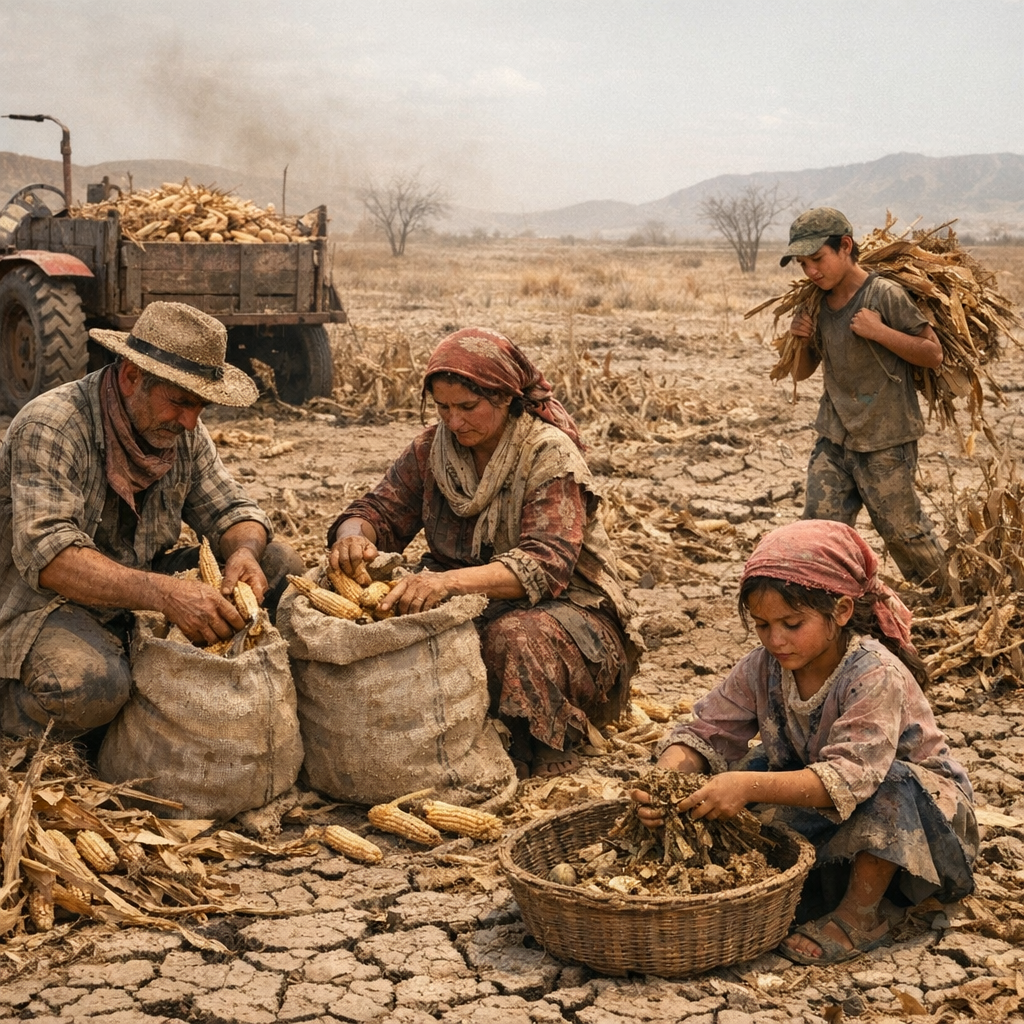
Climate change and extreme weather are adding layers of disruption: droughts, floods, and heat stress disrupt crop yields. At the same time, economic shocks—especially rising prices for staples, fertilizer shortages, and inflation—mean that many households can’t afford what they need, even when food is available.
Global Availability vs. Local Access
Although global food production has largely kept up, agricultural market instability threatens access locally. Fertilizer supply disruptions, particularly stemming from the conflict in the Middle East, are pushing up costs for farmers in vulnerable countries. Poor infrastructure and weak trade links also limit supply to those in need.
Healthy diets remain beyond reach for billions—even where food is physically available—because of affordability, supply chain gaps, and nutrition-impoverished food systems. Especially in low-income regions, a lack of income and inadequate social protection hinder real progress.
Projections and Where Things Could Go
Outlooks for the next decade suggest some growth in agricultural output and income for farmers in parts of Asia, Latin America, and sub-Saharan Africa. But even with projected gains, climate shocks, conflicts, and economic pressures could reverse gains unless urgent action ramps up.
What Helps: Pathways Toward Progress
- Scaling up funding for resilient agriculture—supporting local production so that communities aren’t overly dependent on imports and volatile global markets.
- Investment in infrastructure like storage, transportation, and markets to reduce loss, waste, and disruptions.
- Supporting social safety nets and nutrition programs that reach women, children, and rural households early before crises escalate.
- Coordinated international efforts—governments, NGOs, UN agencies—working together to bridge funding gaps and strengthen global supply chains.
- Climate-smart policies that build resilience: managing water, soil health, crop diversity, and adapting to weather extremes.
For Grand Rapids readers, global hunger may feel distant—yet the ripple effects of food price spikes, supply disruptions, climate risks, and migration touch us all. Understanding what’s happening abroad helps inform what we support here—and why global solidarity matters now more than ever.