

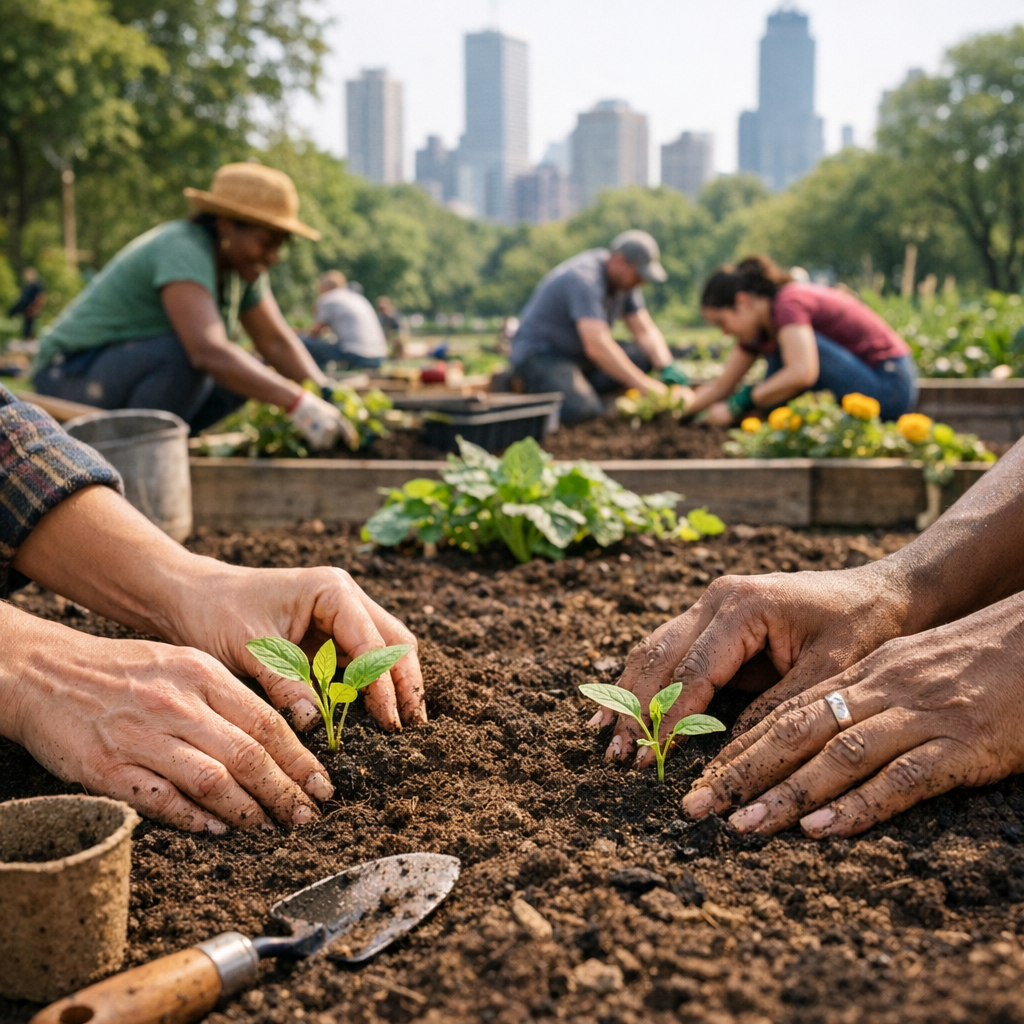
My name is Liam Garcia, and I’ve lived in Grand Rapids long enough to see our city change—streets shift, neighborhoods grow—but something quiet and powerful has been blossoming in parks, vacant lots, and community corners: urban agriculture. These growing initiatives are doing more than putting fresh produce on tables—they’re rewriting what community looks like here.
It starts with food access (and dignity)
As prices for groceries climb, many neighbors—especially in environmental justice zones—wrestle with finding fresh vegetables without long drives or unhealthy trade-offs. The city’s Urban Agriculture Project (UAP) is stepping into that gap. In spring 2026, Grand Rapids awarded its first grants—about $150,000 total—to partners like Access of West Michigan and Jade Rabbit. Their work? Raised garden beds, an urban orchard, a native plant garden—all in parks where access has been scarce. These projects aren’t just about growing food; they’re about growing hope.
Building shared power and trust
When community gardens are led by people who live in those neighborhoods, not appointed from outside, everything shifts. Leaders get trained. Neighbors collaborate. Culture is honored. These gardens—whether in East-own, South Side, or neighborhoods once redlined—become places where hard conversations happen over soil, not politics. Research shows gardens in Grand Rapids help with environmental justice, social cohesion, leadership development, and even healing divides.
Turning parks into shared places of renewal
You may have noticed: there’s new life in parks across the city. The parks department is expanding edible landscapes—in dozens of parks within environmental justice zones. Projects in Joe Taylor Park include community orchards and herb beds. Others in Garfield, Campau, and MLK Parks are gaining both funding and infrastructure. These gardens can reduce food insecurity and improve air and soil quality. They’re also reminders: parks aren’t just green space—they’re vital community infrastructure.
The challenges ahead and what neighbors can do
Of course, there are hurdles: funding runs tight. Some soil needs remediation. Water access and long-term maintenance can be burdens. Coordination among city departments, nonprofits, and volunteer groups is imperfect. Garden care often relies on sweat equity, not sustainable budgets.
Here’s how you can help make urban gardens stronger in Grand Rapids:
- Support or volunteer with local groups—planting, weeding, harvesting—you’d be surprised how far a few hours can go.
- Attend city engagement sessions—have a voice in shaping where and how green spaces are used. Engaging through EngageGR or public parks planning helps make sure resources reach the neighborhoods that need them most.
- Advocate for consistent budgeting and infrastructure—water access, soil testing, tools—and for policies that recognize these gardens as essential, not optional.
- Buy or share produce from community gardens—keep food local, support local growers.
Looking growing forward
Urban agriculture isn’t a temporary solution—it’s a cornerstone of a more just, connected Grand Rapids. Gardens are more than plants. They’re places of learning, meeting, grief, celebration. Places where we reclaim land—and our agency—together. I believe when city donors, neighbors, and city halls treat these spaces with care and long-term commitment, we’ll see soil soaked with possibility, and neighborhoods that root deeper in belonging.